
Best time to visit Japan
Last checked August 8, 2026
The short answer
Cherry blossom peaks in the first week of April in Tokyo and Kyoto, and autumn colors in the last week of November. Mild, dry, and shoulder to shoulder. The window most people miss is May and early June, which gives you the same temperatures and a fraction of the crowds, and it closes the moment the rainy season reaches the main island in early June.
Japan month by month
Pick your month.
North and south are worlds apart
In January, Sapporo sits at 0°C (32°F) and Naha at 20°C (68°F). That is 20 degrees, in one country, on the same day. Inhabited Japan stretches across almost twenty degrees of latitude, so picking a month without picking a region tells you almost nothing. And the thermometer is only half of it: Japanese summer humidity pushes what you actually feel well above the number on the page, which is why a humid Japanese summer day is harder work than a much hotter day somewhere dry.
| City | January | April | July | October |
|---|---|---|---|---|
| Sapporo north (Hokkaido) | 0° | 12° | 25° | 16° |
| Tokyo central (Kanto) | 10° | 19° | 30° | 22° |
| Kyoto central (Kansai) | 9° | 20° | 32° | 23° |
| Osaka central (Kansai) | 10° | 20° | 32° | 24° |
| Naha far south (Okinawa) | 20° | 24° | 32° | 28° |
Average daily highs in °C, 1991-2020 normals.
The four seasons

Spring turns on 10 days
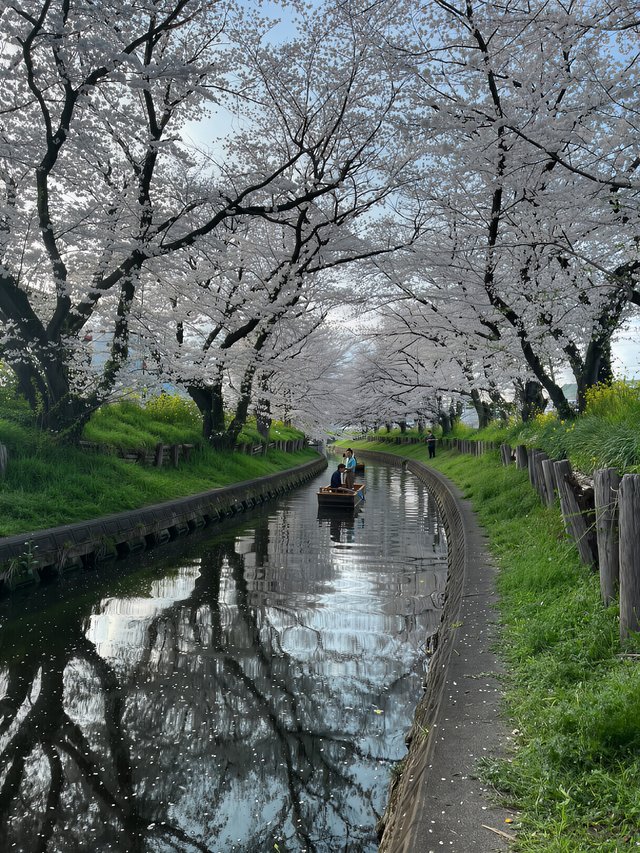
March and April are what almost everyone aims for, and the reasons are good ones: the temperature climbs fast and the cherry trees flower. The trap is assuming the window is wide. The cycle always runs the same way, and only its start date moves: bare branches, then the first flowers, then peak bloom about a week later, then the petals drop over the following week and green leaves take their place. In Tokyo, that's about 10 days. Show up a week early and you get bare branches; a week late and you get leaves. The regional averages are further down this page.
The last week of March is also the end of the Japanese school and financial year. Companies move staff from one city to another in the same few days, and trains and hotels fill with Japanese travelers before any foreign visitor gets near them, which is why late March books out on a domestic calendar rather than a tourist one. On April 1, the entire country starts its new year on the same morning.
Our take: if your dates can't land on the bloom, May beats April. Twenty to twenty-five degrees. Prices drop once Golden Week ends on May 5.
Summer splits the country in two
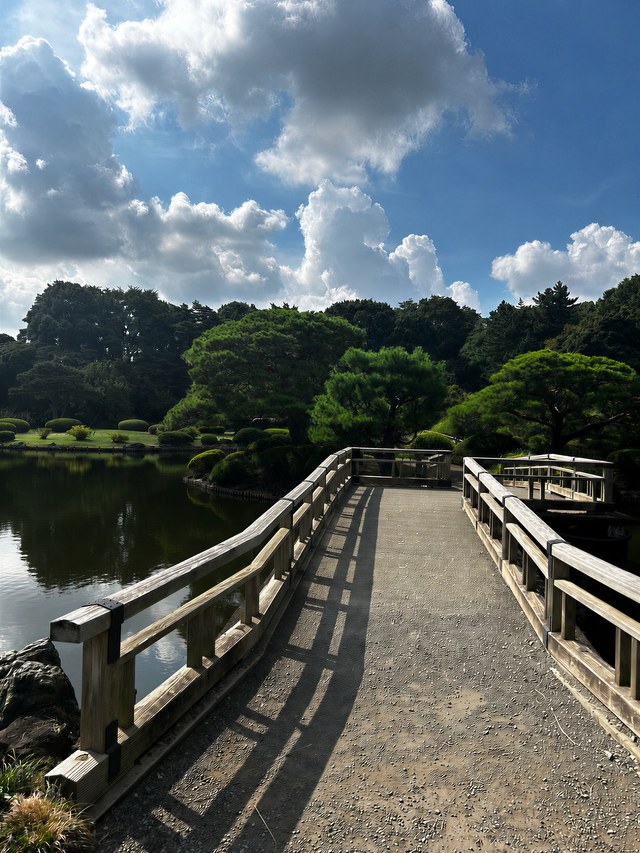
From mid-June to mid-September the southern half is hot and humid enough that walking Kyoto for a day becomes an ordeal. The north gets off lightly: the Japan Meteorological Agency does not declare a rainy season for Hokkaido at all, the only region in the country with no such declaration, and in July the weather there is at its best. This is when the north-south gap earns its keep.
Summer is also festival season, and a festival takes over the whole city. Gion Matsuri runs the entire month of July in Kyoto, with its two float parades on the 17th and the 24th. Pack light clothes and something to change into. Indoor air conditioning sits around 28°C (82°F), not 20°C (68°F), because of the government's Cool Biz campaign.
The two waves cross the country in opposite directions
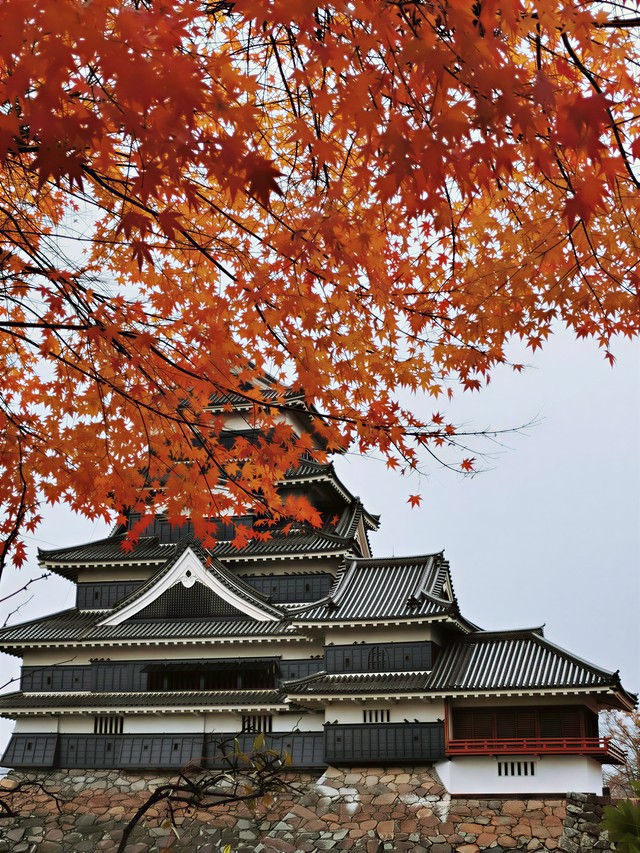
Cherry blossom runs south to north and autumn color runs north to south, so a date that lands perfectly in one region misses in another, and what decides a trip is a region paired with a week rather than a figure for the whole country.
November is, along with the winter months, the driest time of year in Tokyo. The sky is often a hard clean blue. In Kyoto the colors peak in the last week of the month, give or take a few days depending on the year. The big temples open at night then, with a ticket separate from the daytime one and queues that form before dark. Get there at opening or don't bother.
The downside is well known: November is also the most expensive month of the year in Kyoto, and the first to sell out at ryokan inns.

Winter is the cheapest season
December to February is the cheapest and quietest Japan you'll find. Tokyo rarely drops below 0°C (32°F), and Mount Fuji is visible from the city far more often than in spring, while the north is another story entirely, with some of the heaviest snowfall in the inhabited world and a ski season that runs from December to March.
One detail ruins trips: from December 29 to January 3, a lot of small restaurants and neighborhood shops close, and long-distance trains are full.
Worth knowing, and it catches most people out. The sun sets very early in autumn and winter. From late October to January it's gone between 4:30 p.m. and 5 p.m. Start early if you plan on rural areas, where everything closes with the daylight.
Blossom and autumn colors, region by region
The dates below are averages of recorded observations. Every year departs from them by several days, in one direction or the other. As for how cherry blossom season is declared: somebody counts the flowers on one marked tree, by hand.
| Region | First blossom | Peak bloom | Autumn colors |
|---|---|---|---|
| Fukuoka (Kyushu) | March 22 | March 31 | December 1 |
| Kyoto / Osaka (Kansai) | March 26 | April 4 | December 1 to December 5 |
| Tokyo (Kanto) | March 24 | March 31 | November 28 |
| Sendai (Tohoku) | April 8 | April 13 | November 17 |
| Sapporo (Hokkaido) | May 1 | May 6 | October 28 |
1991-2020 averages. Last checked August 10, 2026. 気象庁 (Japan Meteorological Agency, JMA), 生物季節観測 (平年値 1991-2020): さくらの開花日・満開日 for cherry blossom, 生物季節観測累年表 かえでの紅葉 for koyo, the autumn colors.
The catch
The first bloom forecasts of the year come out around January. They're revised every week and still move by several days in March, which means a non-changeable flight booked on a January forecast is a bet on a number that the people publishing it already expect to change.
The rain comes in two waves
These two get confused constantly. They fall at different times, over different regions, and you handle them differently.
The rainy season
Tsuyu, the rainy season, crosses the country from south to north: May 10 in Okinawa, June 7 on Honshu, and it lifts around July 19. It does not rain continuously. It alternates between heavy bursts and muggy bright spells. Kyoto's temples are empty, the hydrangeas are at their best, and accommodation prices hit their floor for the year.
Here's the part almost nobody tells you. These dates are not a calendar fixed in advance. The Japan Meteorological Agency declares the start and the end of the rainy season as it happens, then revises those declarations in autumn once the full records are in. Which means nobody knows this year's real dates until September.
Typhoon season
Typhoons reach Japan from July to October, peaking in August, and hit Okinawa and Kyushu first. On Honshu, the main island, a typhoon rarely costs you more than 24 to 48 hours. The real risk is less the wind than the planned shutdown of transport: rail companies announce the day before that shinkansen services, the bullet trains, are suspended on an entire line. Kansai International, the airport serving Osaka and Kyoto, has closed for several days running.
So one simple precaution if you fly home in September: be in your departure city the night before the flight, not on the morning of, because a canceled train on the day of departure costs a great deal more than one extra hotel night.
When not to go
Three moments when the entire country travels at once. Prices climb and ryokan inns sell out months ahead. Our article breaks the year down week by week, and finds that the other 49 are far more open than a month-level list suggests.
Golden Week
Four public holidays back to back. All of Japan takes to the road in the same week, and domestic prices follow.
Obon
Families travel home. Trains out to the regions are packed, and the ones into Tokyo run empty.
New Year
The country genuinely stops. Many shops and museums close, and the temples overflow on the night of the 31st.
What it costs
Flights and accommodation don't get decided at the same moment. A flight price moves every day and rewards patience; a ryokan room disappears and does not come back. Watch the flight, book the room.
What a flight costs depends on where you leave from, so we keep a page per market, each built from fares we record every day: flights to Japan from the UK and flights to Japan from the US. Both rank the twelve months and show which ones are worth the wait.
The flight is one line of the budget. The whole of it, rooms, trains and meals included, is on the trip cost page for US travelers and its UK counterpart. The room has a calendar of its own: when bookings actually open, and what an empty calendar means before that date.
End of step 1
Next stop: what the trip will cost.
Crowding: 観光庁 (Japan Tourism Agency), 宿泊旅行統計調査, 2023-2025 average, over the prefectures of the areas this site tracks. Temperature and rainfall: 気象庁 (Japan Meteorological Agency), 1991-2020 normals. Rainy season and typhoons: same agency, 1991-2020 normals.